Build a League to Last a Lifetime
2031-36
The 10-year operating plan represents the final phase of USQ’s transition from recovery to sustainability. While the three-year plan focused on stabilization and infrastructure, and the five-year plan focused on regional maturity and operational consistency, Years 6-10 focus on long-term durability, sustainable scaling, and realizing the league’s full vision.
Over the next five years, USQ will prioritize:
Sustainable growth supported by strong infrastructure
Self-sustaining regional ecosystems
Lifelong participation pathways from youth through alumni engagement
Revenue diversification and financial resilience
Consistent, high-quality participant and spectator experiences
Leadership development and organizational durability
Accessibility, inclusion, and community alongside competitiveness
By 2036, success will be measured not only by the number of players and teams, but by the strength of the systems that support them. USQ will be a stable, credible national league with sustainable teams, healthy regions, diversified revenue streams, and clear opportunities for people to participate, compete, lead, and remain connected throughout their lives.
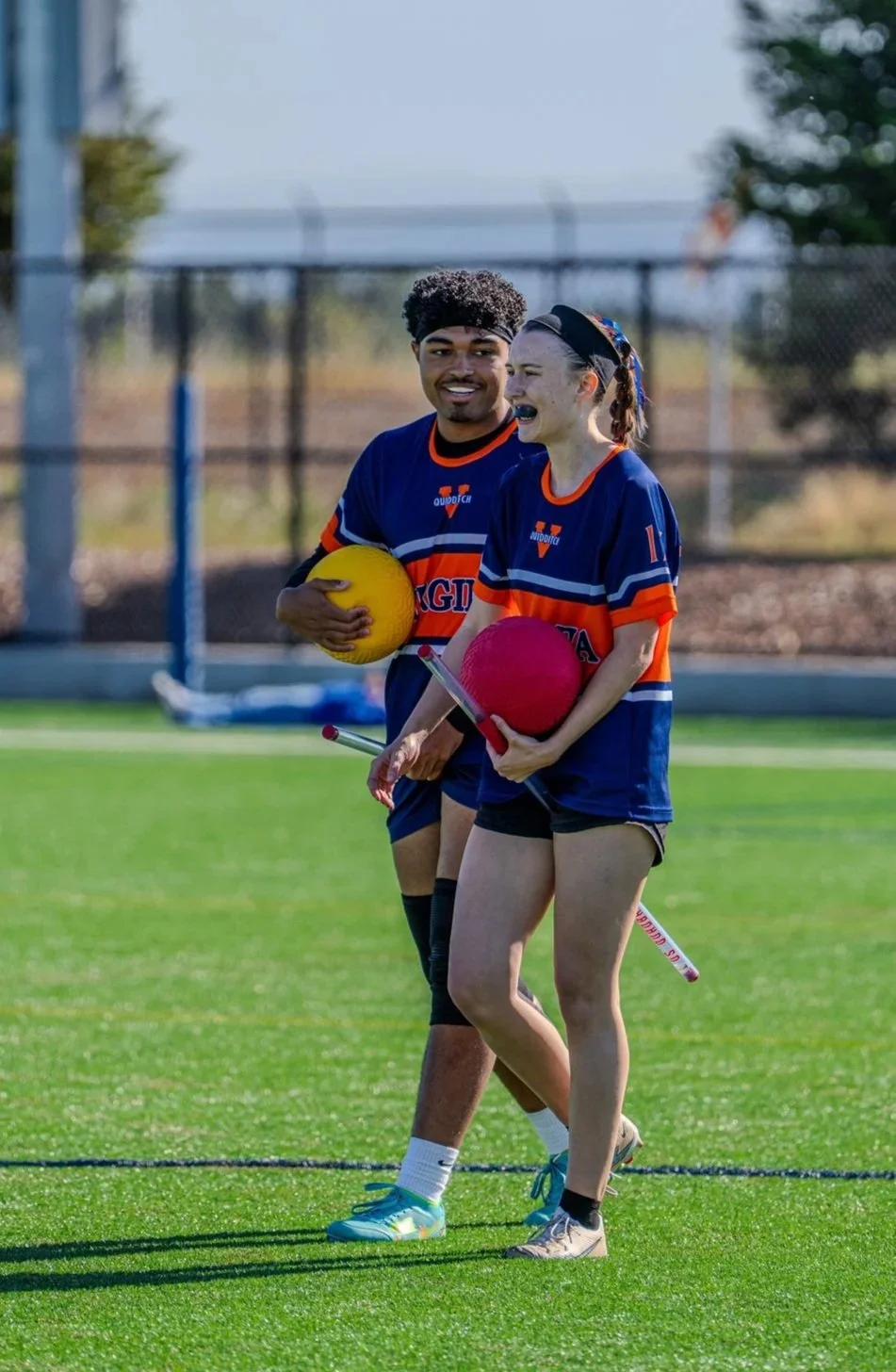
The next decade is about building a durable, future-ready organization where quadball thrives in every region and at every stage of life.

EXPLORE THE PLAN
YEAR SIX
-
Total player members: 1,445
College players: 740
Club players: 655
Increase number of active college teams to 50+
Increase number of active club teams to 44+
Key Actions
Expand sustainable regional ecosystems nationwide
Increase
Local playing opportunities
Regional tournaments and invitationals
Recreational and developmental participation pathways
Youth
Expand recurring youth programs into additional metropolitan areas
Increase transition pathways from youth participation into college recruitment systems
Club
Expand support systems for underserved and isolated regions
Continue strengthening college-to-club mentorship systems
-
Increase total revenue by 79% (over Year 1 revenue)
Increase non-dues share to 62%
Secure $8,325 in sponsorships and/or licensing deals
Scale youth program revenue to $56,887.50
Key Actions
Expand sponsorship packaging around:
Youth initiatives
National events
Broadcast inventory
Accessibility initiatives
Expand:
Merchandise offerings
Vendor partnerships
Licensing opportunities
Improve consistency of:
Event profitability
Sponsor retention
Donation campaigns
-
College → club transition rate: 31%
Year-over-year team survival: 86%
Key Actions
Expand leadership succession planning systems
Improve volunteer onboarding and training processes
Increase alumni engagement:
Coaching
Officiating
Recruitment
Fundraising
-
Event Quality
Increase consistency of tournament standards across all events
Expand spectator entertainment and fan engagement opportunities
Officiating
Expand regional officiating leadership systems
Increase practical training and accountability systems
Marketing
Improve year-round storytelling and social media consistency
Increase visibility in local sports and community media markets
-
Regional infrastructure supports sustainable year-over-year growth
USQ becomes less reliant on national intervention for local stability
Revenue and participation growth continue at a manageable pace
YEAR SEVEN
-
Total player members: 1,545
College players: 795
Club players: 690
Increase number of active college teams to 53+
Increase number of active club teams to 46+
Key Actions
Increase geographic accessibility to local quadball opportunities
Expand
Developmental opportunities between college and club teams
Recreational tournaments
Adult low-commitment participation models
Youth
Increase school and recreation department partnerships
Launch recurring youth-focused regional events
Club
Strengthen support systems for emerging club regions
-
Increase total revenue by 93% (over Year 1 revenue)
Increase non-dues share to 63%
Secure $10,482.50 in sponsorships and/or licensing deals
Scale youth program revenue to $62,895.00
Key Actions
Expand
Media partnerships
Sponsorship visibility opportunities
Strengthen
Broadcast quality
Merchandise tracking infrastructure
Vendor Village programming
Community partnerships
-
College → club transition rate: 32%
Year-over-year team survival: 87%
Key Actions
Expand
Alumni leadership opportunities
Recreational retention pathways
Volunteer mentorship programs
Improve retention of tournament staff, regional leaderships, officials
-
Event Quality
Improve accessibility standards leaguewide
Increase consistency of fan-facing experiences
Officiating
Standardize evaluation and development systems nationally
Expand advanced officials training opportunities
Marketing
Increase local and regional media visibility
Improve onboarding content for spectators and new participants
-
USQ becomes more publicly visible and regionally accessible
Participation pathways exist in a majority of major regions
League operations continue becoming more professionalized
YEAR EIGHT
-
Total player members: 1,610
College players: 825
Club players: 720
Increase number of active college teams to 55+
Increase number of active club teams to 48+
Key Actions
Strengthen
Youth to college recruitment systems
Alumni retention pathways
Recreational participation infrastructure
Expand
Local conference systems
Summer quadball opportunities
-
Increase total revenue by 103% (over Year 1 revenue)
Maintain non-dues share at 63%
Secure $11,007.50 in sponsorships and/or licensing deals
Scale youth program revenue to $64,598.30
Key Actions
Expand
International sponsorship inventory (through High Performance Program, hosting IQA events)
Licensing opportunities
Community fundraising initiatives
-
College → club transition rate: 33%
Volunteer retention: 89%
Year-over-year team survival: 88%
Key Actions
Expand training resources for volunteers
Continue strengthening transition systems
Continue strengthening regional leadership pipelines
-
Event Quality
Expand fan engagement opportunities
Increase uniformity of event venue requirements
Officiating
Improve national officiating accountability systems
Expand officials mentorship system
Marketing
Improve leaguewide storytelling consistency
Increase public legitimacy and external credibility
-
Growth systems become increasingly self-sustaining
USQ operates with significantly improved stability and consistency
USQ becomes more resilient against leadership turnover and operation disruptions
YEAR NINE
-
Total player members: 1,773
College players: 890
Club players: 790
Increase number of active college teams to 59+
Increase number of active club teams to 50+
Key Actions
Continue reducing geographic barriers to participation
Expand
Youth accessibility initiatives
Recreational participation models
Local recruitment systems
Strengthen
Local leadership development programming
Alumni engagement systems
Regional operations support
-
Increase total revenue by 116% (over Year 1 revenue)
Increase non-dues share to 64%
Secure $13,400.00 in sponsorships and/or licensing deals
Scale youth program revenue to $72,360.00
Key Actions
Expand
Long-term sponsorship agreements
Broadcast inventory
Continued reserve building
-
College → club transition rate: 34%
Year-over-year team survival: 89%
Key Actions
Expand
Alumni mentorship systems
Volunteer retention initiatives
Leadership succession planning
Improve long-term retention pathways for recreational participants
-
Event Quality
Increase accessibility of national events
Expand fan-facing entertainment
Officiating
Expand regional officiating leadership infrastructure
Improve retention and accountability systems nationally
Marketing
Strengthen national visibility and public recognition
Increase local media integration
-
USQ transitions from recovery-era growth into long-term sustainability
National infrastructure supports consistent participation and retention
Revenue diversification creates greater organizational resilience
YEAR 10
-
Total player members: 2,120
College players: 1,010
Club players: 960
Increase number of active college teams to 62+
Increase number of active club teams to 54+
Key Actions
Maintain and strengthen the full pipeline: youth → college → club → alumni
Expand
Recreational participation opportunities
Youth access initiatives
Community partnerships
Strengthen
Regional ecosystems
Leadership development
Operational consistency
-
Increase total revenue by 132% (over Year 1 revenue)
Secure $14,380.00 in sponsorships and/or licensing deals
Scale youth program revenue to $71,900.00
Key Actions
Secure sustainable long-term sponsorships
Expand
Broadcast quality
Licensing infrastructure
Merchandise opportunities
Community fundraising initiatives
Maintain strong reserve
-
College → club transition rate: 35%
Volunteer retention: 90%
Year-over-year team survival: 90%
Key Actions
Continue improving
Ensure every region has the following:
Sustainable leadership
Officiating infrastructure
Consistent local competition opportunities
-
Event Quality
Deliver nationally recognizable marquee events
Maintain strong accessibility, communication, and operational standards
Officiating
Sustain a nationally consistent officiating development and accountability system
Maintain strong retention and mentorship structures
Marketing
Position USQ as a credible, sustainable national niche sports organization
Continue expanding visibility and accessibility without sacrificing league identity
-
USQ operates as a durable, nationally recognized league ecosystem
Participation, retention, and revenue systems are sustainable long-term
The league has achieved the operational consistency, infrastructure, and stability outlined in the 2036 vision
10-Year Financial Narrative
The first three years of this plan focus on stabilizing the organization and rebuilding the foundation. The five-year check-in is about strengthening regions, improving retention, and putting systems in place that can support sustainable growth. The full 10-year plan is where those efforts start to pay off. The goal is not to become a major professional league. The goal is to become a stable, credible national governing body for a healthy niche sport that can continue serving players for decades to come.
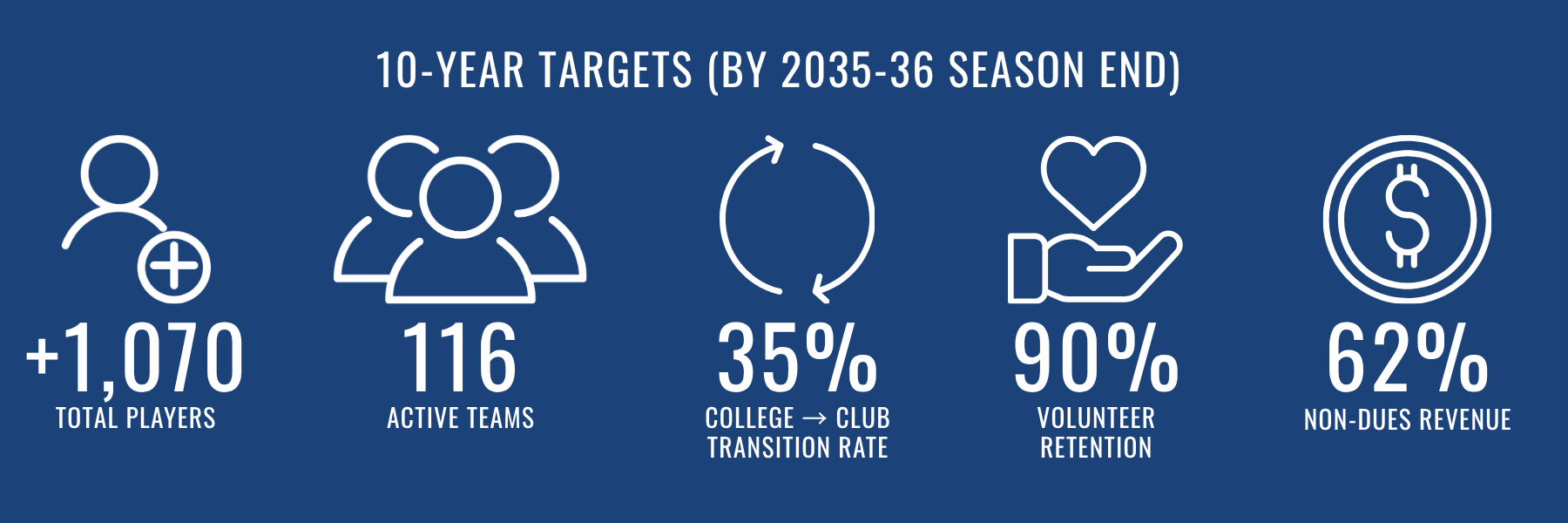
Over the 10-year period, total player membership is projected to grow from roughly 1,050 to more than 2,100, while active teams increase from 58 to 116. Growth is spread across both the college and club divisions, but the bigger goal is creating a healthier ecosystem overall. Teams should be surviving longer, regions should be strong enough to support regular competition, and more players should remain involved after graduation as athletes, officials, coaches, volunteers, and leaders. Success is not just having more players; it is having a system that consistently keeps people engaged in the sport.
Financially, revenue grows from approximately $277,000 to about $719,000 annually. Memberships and team dues remain important, but they become a smaller percentage of the overall budget over time. Today, nearly half of USQ's revenue comes directly from players and teams. By Year 10, that number falls to roughly 38%, with more support coming from events, youth programming, merchandise, sponsorships, donations, and other revenue sources. The objective is to create a broader and more resilient financial model that is less dependent on participation levels alone.
The most significant organizational change is staffing. USQ currently operates with one full-time employee and relies heavily on volunteers and contractors. That model is not sustainable long-term. This projection gradually builds toward four full-time staff and three part-time staff, adding positions only as revenue supports them. The purpose is not to create unnecessary overhead, but to ensure that the organization has the capacity to consistently deliver programs, support members, run events, and maintain institutional knowledge without depending on a handful of overextended volunteers.
Throughout the projection, revenue remains slightly ahead of expenses, allowing the organization to steadily build reserves and strengthen its financial position. By the end of the 10-year period, USQ should have a larger and more stable membership base, stronger reserves, more diversified revenue, and the staffing and infrastructure necessary to support the sport well into the future.
Note: These projections are intended to serve as baseline financial models tied to USQ’s long-term strategic planning process. They are designed to show a realistic path through which the organization could potentially reach the participation, operational, and financial goals outlined in this plan. They are not formal operating budgets or exact predictions. More detailed annual budgets, benchmarks, and priorities will still need to be developed each year based on the organization’s actual financial position, participation levels, staffing, and event performance at that time.
Long-term strategic plans are meant to establish direction more than precision. The purpose of a 10-year plan is not to predict exactly where the organization will be in 2036, but to define what kind of organization USQ is trying to become and what a sustainable path toward that future could look like. These projections are therefore intentionally aspirational while still grounded in USQ’s recent financial history, current realities, and realistic assumptions about steady long-term growth.
OUR VISION: US Quadball is a league built for a lifetime.
From a child picking up a quadball for the first time to an alumnus coaching, officiating, volunteering, or donating decades later, every stage of participation is connected through a sustainable national ecosystem.